
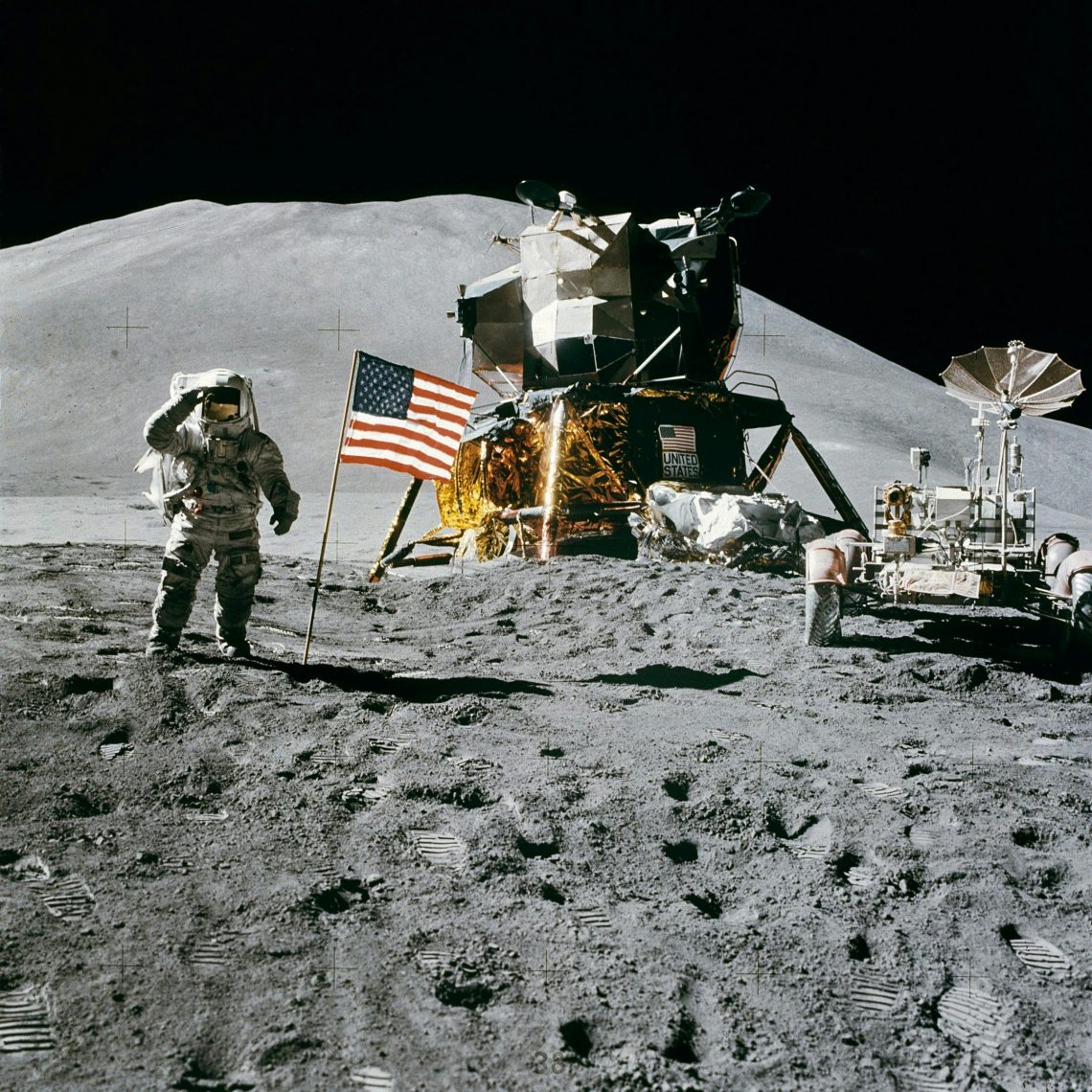
The race to put American astronauts back on the Moon has dissolved into a bitter, high-profile public feud. Tech billionaire Elon Musk launched a personal and venomous attack on Sean Duffy, NASA’s acting administrator. This confrontation began after NASA decided to re-open the lucrative lunar lander contract for the critical Artemis III mission. The argument quickly escalated from a technical disagreement into a sensational political firestorm. Musk publicly questioned Duffy’s intelligence and suitability to lead the nation’s space program, unleashing a tirade that has shaken the foundations of the U.S. space effort.
At the core of the dispute are the increasing delays facing SpaceX’s massive Starship human landing system (HLS). NASA originally awarded Starship a $2.9 billion contract in 2021. That contract tasked Starship with ferrying the first astronauts to the lunar surface in over half a century. Now, NASA fears the risk is too high, and the timeline too long, to rely on a single, delayed contractor.
The Spark: NASA Declares Starship “Behind Schedule”
For years, the success of the Artemis III mission—the first crewed lunar landing since Apollo 17 in 1972—depended directly on Starship. The original plan requires Starship to achieve an unprecedented feat: successfully completing multiple in-orbit refueling operations before it can travel to the Moon.
However, Starship’s testing schedule has faced consistent delays. Numerous failed launches have marred its development. The orbital refueling system still presents significant technical hurdles. These factors have pushed the target date for Artemis III to mid-2027, at the earliest, a timeline NASA officials now view with extreme skepticism.
The political pressure became the breaking point. President Donald Trump issued a clear mandate to NASA: ensure the U.S. lands on the Moon before China does. China has set an aggressive goal to put taikonauts on the lunar surface before 2030. This intensified international rivalry fueled the urgency behind NASA’s latest actions.
Enter Sean Duffy: The Unexpected Administrator
The catalyst for the breakdown is Sean Duffy, who currently holds two major roles: U.S. Secretary of Transportation and NASA’s acting administrator. President Donald Trump appointed Duffy to the interim NASA role in July 2025. Duffy brings a unique and often criticized background to the agency. He previously served as a Republican Congressman and District Attorney, and famously gained early notoriety as a competitive lumberjack and reality TV cast member. Many critics—including Musk—point out his lack of a traditional scientific or aerospace background.
Duffy confirmed the agency’s mounting frustration in recent public interviews. “We’re not going to wait for one company,” Duffy declared. “We’re going to push this forward and win the second space race against the Chinese.” He directly accused SpaceX of being “behind schedule.” Duffy then announced a plan to open the Human Landing System contract to competition.
This strategic pivot immediately invited industry rivals to bid on the historic Artemis III landing. Jeff Bezos’s Blue Origin, which already holds a contract for the later Artemis V mission, became a primary contender. A major coalition led by Lockheed Martin is also expected to submit a proposal. NASA’s message is now unambiguous: the agency demands redundancy and urgency to meet a critical national deadline. Competition, NASA believes, will drive faster innovation and minimize the risk of a single-point failure in the highly visible Artemis program.
The Barrage: Musk’s Personal and Unfiltered Attack
Elon Musk, whose public persona is often defined by his unfiltered commentary, did not take the criticism or the threat of competition lightly. His response was immediate, aggressive, and highly personal, launched via a series of posts on his social media platform, X.
Ignoring the technical concerns about Starship’s delays, Musk launched a direct attack on Duffy’s professional qualifications. He referred to the acting administrator as “Sean Dummy” and penned the inflammatory claim, “The person responsible for America’s space program can’t have a 2 digit IQ.”
Musk leveraged Duffy’s non-aerospace history for maximum impact. He mocked Duffy’s background as a champion lumberjack speed climber, posting a poll that asked, “Should someone whose biggest claim to fame is climbing trees be running America’s space program?” In his most scathing accusation, Musk claimed that Duffy was “trying to kill NASA!” and suggested he was simply unfit for the job.
This tirade highlights a deep-seated tension over NASA’s leadership and strategic direction. Musk had previously championed his close associate, tech billionaire Jared Isaacman, for the permanent Administrator role. That nomination was withdrawn by the White House, leading to Duffy’s interim appointment. Many observers view Musk’s public assault on Duffy as a targeted attempt to undermine the acting administrator’s authority and force a change in NASA’s leadership, perhaps to pave the way for his preferred candidate.
Read also- https://trendaroundme.com/2025/10/13/stimulus-check-financial-planning-guide-5-smart-ways-to-spend/
The Feud’s Deeper Context: Delays vs. Destiny
The public spat is fueled by insults, but the underlying issue remains a fundamental clash between NASA’s schedule-driven national security goals and SpaceX’s high-risk, high-reward development philosophy.
The Technical Challenge of Starship: Starship is an enormous, revolutionary vehicle. Its lunar profile requires a complex series of steps to reach the Moon. These steps include dozens of on-orbit refueling tanker flights in low Earth orbit. None of these core systems are yet fully operational or proven. The sheer scale of the operation—transferring massive amounts of cryogenic fuel in space—adds layers of complexity and risk that have slowed progress significantly.
The National Imperative: The US government is unwilling to risk the mission. Losing the “second space race” to China would mean not just a scientific setback, but a symbolic loss of geopolitical power. This urgency, driven by the current administration, demands a contingency plan. NASA must ensure that if Starship is not ready by 2027, another American lander can complete the mission before the Chinese deadline of 2030. The decision to open the contract simply provides the “dissimilar redundancy” that space experts often call for in high-stakes missions.
Musk’s Unwavering Confidence: Musk remains defiant, viewing the delays as necessary growing pains for a truly revolutionary system. He maintains that SpaceX is still “moving like lightning compared to the rest of the space industry.” He stresses the bureaucratic drag of legacy aerospace companies. Musk argues that Starship, if successful, represents a massive leap in capability—a fully reusable system capable of eventually supporting a Mars colony. Despite the immediate delays, Musk views Starship’s architecture as fundamentally superior to rival designs. He boldly predicted the outcome: Starship “will end up doing the whole Moon mission. Mark my words.”
The Race Heats Up: A New Era of Competition
Duffy chose not to engage in the personal mudslinging, offering a measured yet firm response on X: “Love the passion. The race to the Moon is ON. Great companies shouldn’t be afraid of a challenge. When our innovators compete with each other, America wins!”
NASA’s pivot marks a decisive moment for the Artemis program. The agency is actively creating competition in the hope of accelerating development and mitigating risk. Blue Origin and Lockheed Martin have already signaled their intent to respond to NASA’s Request for Information (RFI) for alternative lunar lander approaches.
The coming months will be critical to the future of the Artemis mission. SpaceX must rapidly demonstrate key Starship capabilities, especially orbital refueling, to convince NASA that the original contract remains viable. Simultaneously, NASA will evaluate bids from competitors to see if a more conventional lander can be prepared in time for the Artemis III window. The public war of words ensures that the future of the Artemis program—and NASA’s leadership—will remain a highly politicized battleground, directly impacting the schedule and trajectory of America’s next giant leap.
The conflict between Elon Musk’s singular vision and NASA’s pragmatic risk management underscores the immense political, technological, and personal stakes involved in the return to the Moon. For the US, losing the race would be a symbolic defeat. For Elon Musk, the successful landing of Starship is the essential foundation for his ultimate Mars vision—a vision now directly challenged by the very agency that once offered him the first path to the Moon.


