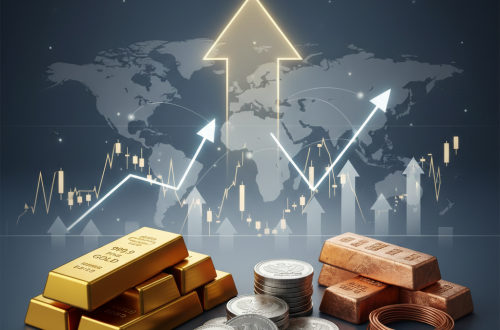

Both silver and gold prices have reached multi-year peaks over the past year, with investors, economists, and average consumers alike pondering one question — why now? Though gold traditionally shines when uncertainty prevails, silver also has ridden the trip, a product of a complex matrix of worldwide economic, geopolitical, and industrial forces.
- Pressures of Inflation and Interest Rates
Among the most compelling arguments for the current gold and silver price boom is persistent inflation. Despite efforts by central banks to pin down prices, inflation in key economies like the U.S., the Eurozone, and India continues to run over targets.
When inflation rises, cash and bonds lose their purchasing power, which forces investors towards assets that hold their value — like gold and silver. Precious metals tend to rally whenever the central banks signal cuts in interest rates or a slowing in the tightening.
- Record Central Bank Purchases
Another primary driving force is bullion-wild central bank buying. Quoting global financial figures, central banks have purchased gold at their all-time highest rate since 2022, particularly in emerging nations such as India, Turkey, and China.
This is a sign of heightened demand to diversify out of the U.S. dollar and reduce dependence on Western assets because of tensions in geopolitics. Silver, while less favored among central banks, has benefited from the overall upbeat tone within the precious metals market.

- Geopolitical Tensions and Safe-Haven Demand
From the ongoing Russia-Ukraine conflict to tensions in the Middle East and U.S.-China trade tensions, the world has witnessed increased uncertainty. When the world is not stable, investors have always sought safe-haven assets, and gold stands right at the top of them.
Silver, at times “gold’s shadow,” also benefits during such periods as investors diversify within the precious metals universe. This has pushed silver-gold ratios to record levels, both metals becoming part of defensive portfolios.
- Green Energy and Industrial Demand Boosts Silver
While gold’s overarching demand is investment and jewelry, silver’s is dual — it is both industrial and precious. Silver is an integral component of solar panels, electric cars, and electronics, sectors that have witnessed hyper-growth as the globe moves towards green energy.
This industrial demand has given a solid tailwind to silver, turning its price rise not just speculative but structurally supported by long-term technology trends.
- Currency Volatility and Weakening Dollar
Relative dollar weakness has played its part as well. Since gold and silver are denominated in dollars, a weaker dollar lowers their price for holders of other currencies, thereby increasing global demand.
Additionally, countries with currency weakening — Argentina, Turkey, or even Japan — have witnessed local investors rushing into gold and silver against weakening local currencies.
- The Outlook: Will the Rally Endure?
Analysts hold that the rally in gold and silver prices will continue up to 2026 if inflation remains sticky and central banks turn to rate cuts. However, any unforeseen stabilization of worldwide growth or ease in geopolitical tensions could curb prices temporarily.
For investors, this means a balanced approach: gold is a good bet for inflation/crisis protection, but silver brings diversification and exposure to the clean energy bubble.
Conclusion
The meteoric rise of gold and silver prices across the world isn’t the handiwork of one force — it’s a result of converging economic, industrial, and geopolitical trends. With inflation continuing, currencies fluctuating, and tech making leaps and bounds, both metals will keep sparkling in global markets. As an investor or buyer, this much is clear: in 2025, the world’s oldest caches of value glimmer as bright as ever.