
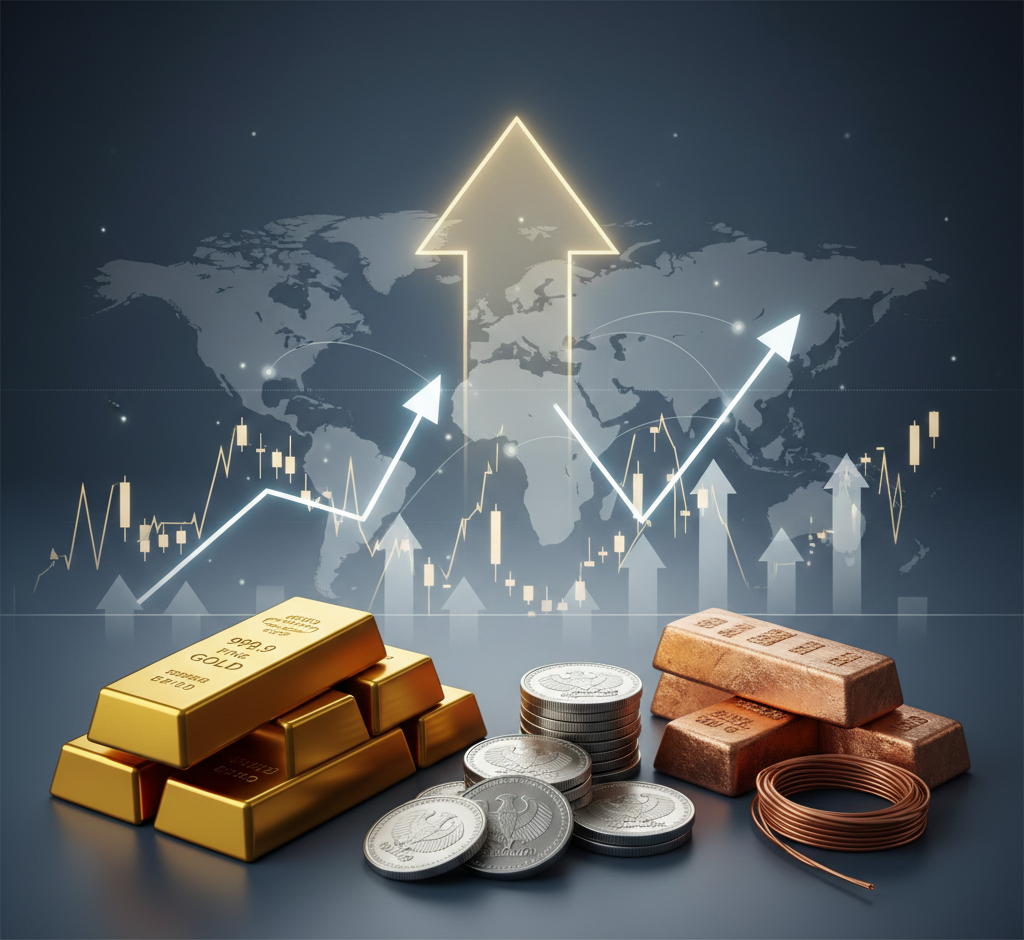
The global metals market has entered 2026 with historic momentum, as gold, silver, and copper simultaneously hit record highs in January.1 Driven by a volatile mix of geopolitical friction, shifting monetary policies, and an intensifying global energy transition, this "triple surge" marks a significant departure from historical trading patterns.
As of late January 2026, gold has surpassed $4,700 per ounce, silver is testing the psychological $95–$100 barrier, and copper remains resilient near $5.80 per pound (approximately $12,500/mt).2

1. Macroeconomic and Geopolitical Catalysts
The primary driver behind the current rally is a "perfect storm" of macro uncertainty and physical supply constraints.3
Geopolitical Friction and Safe-Haven Demand
The start of 2026 has been dominated by renewed trade tensions.4 Specifically, market anxiety spiked following U.S. proposals for a 10% tariff on European nations and a diplomatic impasse regarding the status of Greenland.5 These developments have revived the "Sell America" trade, pushing institutional allocators toward hard assets.6
Monetary Policy and Currency Movements
The Federal Reserve faces mounting pressure as markets price in potential leadership transitions and debates over central bank independence.7
- Interest Rates: Expectations of continued Fed easing in the first half of 2026 have lowered the opportunity cost of holding non-yielding assets like gold and silver.8
- De-dollarization: Central banks continue to diversify reserves away from the U.S. dollar, which hit a two-decade low in its share of global official reserves by late 2025.9
Inflation Expectations
While headline inflation has moderated in some regions, the threat of escalating tariffs and supply chain fragmentation has kept medium-term inflation expectations elevated, sustaining the appeal of metals as a hedge.10
2. Comparative Performance: Gold vs. Silver vs. Copper
While all three metals are rising, their performance profiles differ based on their dual roles as monetary and industrial assets.11
| Metal | 2026 YTD Performance (Approx.) | Primary Driver | Role in Portfolio |
| Gold | +6.5% | Geopolitical risk / Central bank buying | Wealth Preservation |
| Silver | +25.0% | Industrial deficit / Safe-haven spillover | High-Beta Growth |
| Copper | +9.0% | Electrification / Data Centers | Macro Barometer |
Silver: The Outperformer
Silver has significantly outperformed gold, fueled by a structural supply deficit.12 Demand from the solar energy sector, which is expected to grow by 70 gigawatts in 2026, and the AI-driven data center boom have made silver a "double-threat" asset.13
Copper: "Dr. Copper" and the AI Revolution
Copper prices are being sustained by more than just cyclical growth. The metal is essential for:
- AI Data Centers: High-capacity power distribution and cooling systems.14
- EV Infrastructure: Electric vehicles require 3–4x the copper of traditional cars.15
- Grid Modernization: Massive renewable energy integration projects in China and the EU.16
3. Short and Medium-Term Outlook
Short-Term (Q1–Q2 2026)
Volatility is expected to remain high. While the long-term trend is bullish, analysts warn of potential index rebalancing and profit-taking after the parabolic moves in January.17 Resistance for gold is seen near $4,900, while silver faces a critical test at $100.
Medium-Term (Year-End 2026)
The consensus among major financial institutions remains optimistic:
- Gold: J.P. Morgan and Goldman Sachs forecast prices averaging between $4,900 and $5,100 by year-end.18
- Silver: High-end estimates suggest a potential climb toward $175–$220 if structural deficits persist.19
- Copper: Expected to stay in the $11,000–$12,500/mt range, supported by limited new mine supply.
4. Implications for Stakeholders
- Investors: A shift from the traditional 60/40 (stocks/bonds) model toward higher commodity allocations (up to 20% in some model portfolios) is becoming more common.20
- Industries: Manufacturers in electronics and renewable energy face rising input costs, potentially accelerating "thrifting" (reducing metal content) or switching from copper to aluminum.
- Global Markets: High metal prices act as a "tax" on the energy transition, potentially slowing the pace of decarbonization if supply does not meet demand.
FAQ: Metals Market Surge
Q: Why is silver rising faster than gold?
A: Silver has a much smaller market and higher industrial utility.21 The current surge is driven by a combination of safe-haven demand and a chronic supply deficit in the solar and electronics sectors.22
Q: Will copper prices stay high?
A: Most analysts believe copper will remain elevated due to the 15–17 year lead time required to open new mines, which makes supply unresponsive to sudden demand spikes from the EV and AI sectors.23
Q: Is it too late to invest in precious metals?
A: While prices are at record highs, many strategists suggest that the underlying "regime change" in global trade and debt levels indicates that the current bull market may have years of room to run.
For a deeper dive into the technical levels and specific triggers of this rally, you can watch this analysis of Why Gold, Silver, and Copper Are Entering a New Phase in 2026.
This video provides expert insight from David Erfle on how resource nationalism and Federal Reserve policy are fundamentally reshaping the metals cycle this year.


